Part 2 of 3: Redefining the Workplace
By Noel Brewster — Workplace Strategist | Ex-BDP, TTSP, MCM, Perkins+Will
Redefining the Workplace · A three-part series
- Part 1 Technology →
- Part 2 — you are here Space & mix
- Part 3 People & purpose →
Part 1 looked at the infrastructure behind flexibility. This time: space itself.
The office isn’t the default location for every task anymore, people can do plenty from home. So it has to earn the commute: better collaboration, real access to colleagues, connection, quiet away from a noisy kitchen table. That’s a lot to ask, and it raises some uncomfortable questions:
- Why does the office feel empty most of the week but overcrowded every Tuesday?
- Why are desks unused while meeting rooms are booked solid?
- Why do people complain about noise when there’s apparently plenty of space?
The answer usually isn’t “more space” or “less space.” It’s the wrong mix.
Why are people actually coming in?
“Desks per person” and “square feet per employee” only tell part of the story. A business built around collaboration needs a completely different workplace to one built around long stretches of focused technical work — even with identical headcount. The useful questions: why do people attend, what’s hard to do anywhere else, and what gets in their way once they’re here? Demand also swings hard by day — plenty of capacity across the week overall, real strain on one or two peak days. That’s the difference between too much space and the wrong type of space.
Fix the mix, not just the layout
A social space that flexes into extra collaboration on busy days. Project tables and mobile furniture that adapt as demand shifts through the week. But don’t make everything infinitely flexible — spaces designed to do everything often do nothing well, because people don’t know how to use them or whether they’re even allowed to move the furniture. Decide which settings need a fixed, obvious purpose, and which should genuinely earn their keep across the week. And if reconfiguring a space needs a facilities callout every time, it isn’t flexible — it’s theoretical.
Furniture should define a space, not just fill it. Start with the activity, not the floorplate:
- A quick chat needs comfortable seating and some acoustic separation. Nothing more.
- A two-hour project session needs a shared surface, integrated power, room to display information.
- Focused solo work needs real ergonomic support and protection from distraction.
- A confidential call needs a fully enclosed setting.
Noise is rarely just an acoustics problem
The instinctive fix is more panels, more screens. Often the real issue is upstream. Collaborative work sitting next to focus work, calls happening at open desks because there’s nowhere better, nobody quite sure what each part of the office is for. That’s a strategic problem wearing an acoustic costume. Fix the zoning and the seating (high-backed, booths, screens) before you reach for more soft furnishings.
Offer real choice, not just variety
Ten visually different settings can feel identical if they all share the same noise level and seating type. Genuine choice means a real range of high- and low-stimulation environments, clearly zoned so people know what to expect, which matters hugely for many neurodivergent employees, and tends to benefit everyone else too.
Takeaways
- Measure the mix, not the metres. Square footage tells you almost nothing about whether the space actually works.
- Design furniture to a brief, not a floorplate — start from what people need to do, not what fills the gap.
- Fix zoning before acoustics. Panels are a last resort, not a first response.
- Build in real choice — a range of settings, not just a range of finishes.
Not sure whether your office is too big, or just configured wrong? Sagal’s workplace strategy process turns this kind of guesswork into evidence — a future space budget and a furniture kit of parts you can test, cost and act on before you commit to a relocation, refit or refurb.
Request your Workplace Strategy Proposal → workplace@sagalgroup.co.uk
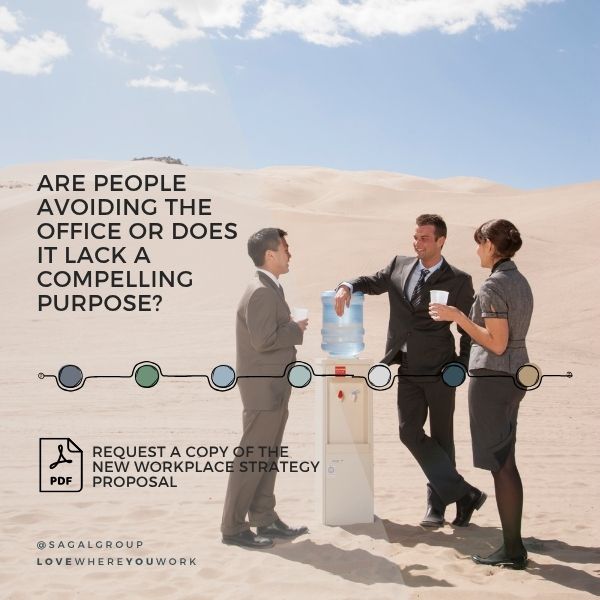
Next: Part 3 — Are People Avoiding the Office, or Does It Lack a Compelling Purpose?
Ready to Upgrade Your Workplace?
Experience our furniture solutions in person. Book an appointment to visit our Clerkenwell Showroom, test-drive our designs, and speak with our workplace specialists.
SCHEDULE A VISITExplore
Not ready to meet just yet? Explore more insights, trends, and inspiration in our Knowledge Centre.
Knowledge Centre